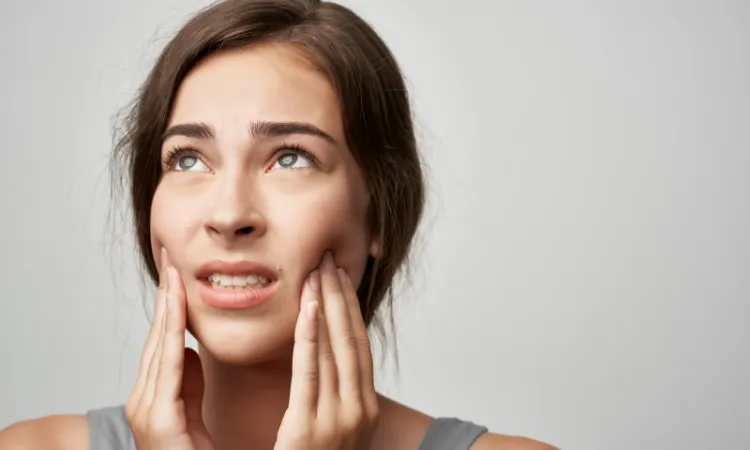
You’re sitting at a restaurant, and you take a sip of ice water. Suddenly, a sharp, shooting pain zings through one of your teeth. It lasts just a second or two, but it’s intense enough to make you wince. If this sounds familiar, you’re not alone. Tooth sensitivity to cold is one of the most common complaints we hear from patients at Bloom Dental.
The good news is that this kind of pain is usually a signal, not a life sentence. Understanding why it happens is the first step to stopping it.
How Teeth Sense Cold
To understand sensitivity, it helps to know a little about how teeth are built. Underneath your tooth’s hard outer layer of enamel is a softer layer called dentin. And at the center of the tooth is the pulp, which contains nerves and blood vessels.
When enamel is intact, it insulates the tooth from temperature changes. But when enamel wears down, or gums recede, the dentin becomes exposed. Dentin is full of tiny microscopic tubes that lead directly to the nerve. When cold hits those tubes, the nerve reacts, and you feel that sharp twinge.
The Most Common Causes
Several reasons can make a tooth suddenly sensitive to cold. Here are the most common ones.
- Receding gums: This is a big one. As gums pull back, they expose the roots of your teeth. Roots don’t have the same thick enamel coating as the crowns of your teeth, so they’re much more sensitive. Receding gums can happen from brushing too hard, gum disease, or simply genetics and aging.
- Worn enamel: Years of chewing, acidic foods and drinks, and even stomach acid from reflux can wear down enamel over time. Once it’s gone, it doesn’t grow back.
- A chipped tooth: Sometimes the damage is invisible to the naked eye. A small chip can let cold travel straight to the nerve.
- A failing filling or crown: If a dental restoration has worn down, loosened, or developed a gap at the edge, cold can sneak underneath and irritate the tooth.
- Teeth whitening: Sensitivity is a common temporary side effect of whitening treatments, especially over-the-counter kits used incorrectly.
- Grinding and clenching: If you grind your teeth at night, you may wear down enamel faster than you should, leaving your teeth more vulnerable.
When It’s Just Annoying, And When It’s a Warning Sign
If you feel a brief, sharp sensation that disappears as soon as the cold is gone, it’s often related to exposed dentin or a minor issue. That’s still worth mentioning at your next visit.
But if the pain lingers for more than a few seconds, throbs on its own, or wakes you up at night, that’s a different story. Lingering pain can point to a deeper problem, like a pulp infection, an abscess, or a damaged tooth that needs treatment. In those cases, you shouldn’t wait.
What We Can Do About It
At Bloom Dental, Dr. Jomana Shayota takes a thorough, comprehensive approach to diagnosing sensitivity. She’ll examine your teeth, check your gums, and take X-rays to see what’s happening beneath the surface. Her Dawson training means she looks at your whole bite, not just the one tooth that’s bothering you, because sometimes the source of the problem isn’t where you feel it.
Depending on what we find, treatment might include:
- Desensitizing treatments applied in the office to block pain signals
- Fluoride varnish to strengthen exposed areas
- Bonding to cover exposed roots
- A crown or filling if a tooth is chipped or a restoration has failed
- A custom nightguard if grinding is the culprit
- Treatment for gum disease if receding gums are the cause
In many cases, we can also recommend a toothpaste designed for sensitive teeth and adjustments to your brushing technique.
Don’t Just Live With It
Many people assume cold sensitivity is something they have to put up with. It isn’t. Often, it’s a sign of something we can address, and catching it early can prevent a bigger problem down the road.
If cold drinks make you wince, call Bloom Dental at (248) 963-7925 or schedule an appointment online. Dr. Shayota will take the time to figure out what’s going on and walk you through your options. Your smile shouldn’t hurt. Let’s get to the bottom of it.